In the beginner’s mind there are many possibilities, but in the expert’s there are few. Shunryu Suzuki
I told a friend the other day that I see myself as a lifelong beginner. I’d sent him a picture of a watercolor sketch I’d just finished. He told me to keep at it. I specialize in starting things, growing, maybe hitting a plateau, maybe continuing on to see where it leads. It’s astonishing the number of things I attempt and enjoy without ever truly advancing to a level you’d describe as expertise. I think I’m okay with that. It’s so warm and pleasant where the water is shallow.
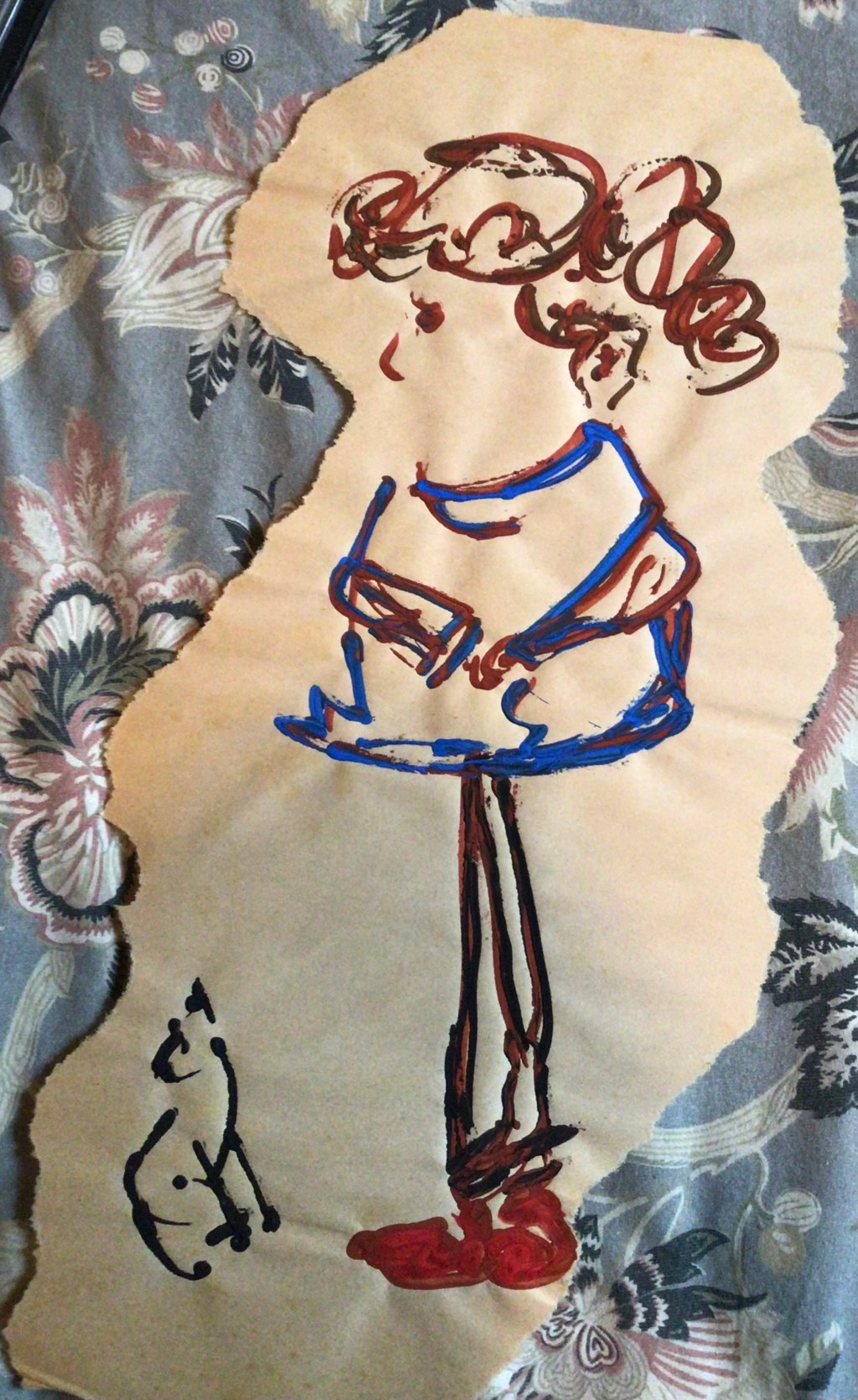
Painting is one of those things I’m beginning, again. When I was very young, I loved drawing scenes and trying to paint them without ever really understanding there is a right way to go about it. When I lived in a beach town, beach girl me drew ocean waves at sunset – the kind you’d find in a gift shop. They weren’t what you’d call “good,” but I loved layering the colors for effect – darker shades down low, fainter and less saturated for objects in the background. When I came to San Francisco, money was scarce. I’d go to Chinatown and find little tubes of paint in the art stores – often choosing only one color at a time. I’d make big, bold sketches in a large newsprint tablet – gestural portraits in midnight blue, or India yellow, or deep scarlet. It was wonderful to work without rules or restraint, creating whimsical portraits with a thick outline. Something about my utter lack of training gave me the freedom to explore. Expression was always more important than detail or perspective. When I take out these wild, dynamic, or moody paintings, I feel a deep affection for them. Their paint is cracking, the paper is falling apart, but something in those faces makes me want to recreate the careless girl who gave them life. Those creatures in paintings – the tawdry girls, often with the slim outline of a cat matching the direction of their gaze. I want to find them again and paint them with older eyes and better paint.
Then I worked hard for over thirty years and told myself I didn’t have enough time for painting. Keeping a band going and teaching little kids to read and write seemed enough. I always made sure to keep big sheets of fresh paper on my classroom easel and little cups of paint so that my students could play with color and line in the afternoons. There was always a bin of watercolor palettes, paper, and brushes handy as well. And every child learned how to get their own water, keep their brushes clean, and just “tickle the paint” so as not to demolish the brush or create a cavern in their color. I loved those times when all the usual requirements and pressures were put aside in favor of offering my little ones a lesson – whether it was drawing a dinosaur, sketching a castle or a cypress tree and then showing them the magic of adding paint. I’d show them how to gently tickle with paint with their brush, how to layer colors and then keep their palettes clean. The focus and earnest efforts of these professional beginners was always inspiring, always humbling, always a delight. For years, unless I was doing a lesson for my students, my own painting practice would have to wait.
But I miss that wild, painting punk I used to be. And like any good retiree, I’m determined to stay mentally active. Plus, I can afford good paint now in rich pigments, and cold-pressed paper that won’t crumble after a few years, I’ve even invested in a small collection of those wonderful, fine-tipped Micron pens. So, I’m learning. Even if all I can come up with at times is a flat daisy, a robin with his ass in the air, or an iris with more beard than Santa Claus. Fear not, I tell myself. It’s not the destination that’s important, it’s the journey. Whatever that means. And it turns out, there are techniques to discover – like shading with pencil to create the illusion of dimension for an eye, a raindrop, the petal of a flower. I even like my mess-ups. My nasty little robin has attitude.
What I’m learning lately is there are some specific methods for watercolor too, like giving the sketch a thin coating of water, loading just the right brush with just the right amount of pigment, then carefully dabbing just the tip – just a touch, just a kiss – onto the paper and letting the color flow toward the wet areas. But I’ve discovered a new resident sitting at my desk, a stranger to the wild young painter. It’s my self-doubt. I’ve acquired a crazy rage to try controlling the outcome or worse, to collapse on the sofa and scroll away the day. It becomes a temptation to overwork the paint, to try controlling the flow of color. But, as in so many areas, trying for perfection, trying to force control, flattens the colors and ruins the effect of the image – like reading the end of a book ahead of time before savoring the language of the story. A life is like that too. You can work too hard and spoil just about anything or give up and stare at life from the sofa. I miss the wild girl I once was, and I want her freedom back. And so, I will celebrate my membership in the secret society of beginners. Let me dip my brush, let the colors flow, and see where the image goes next.
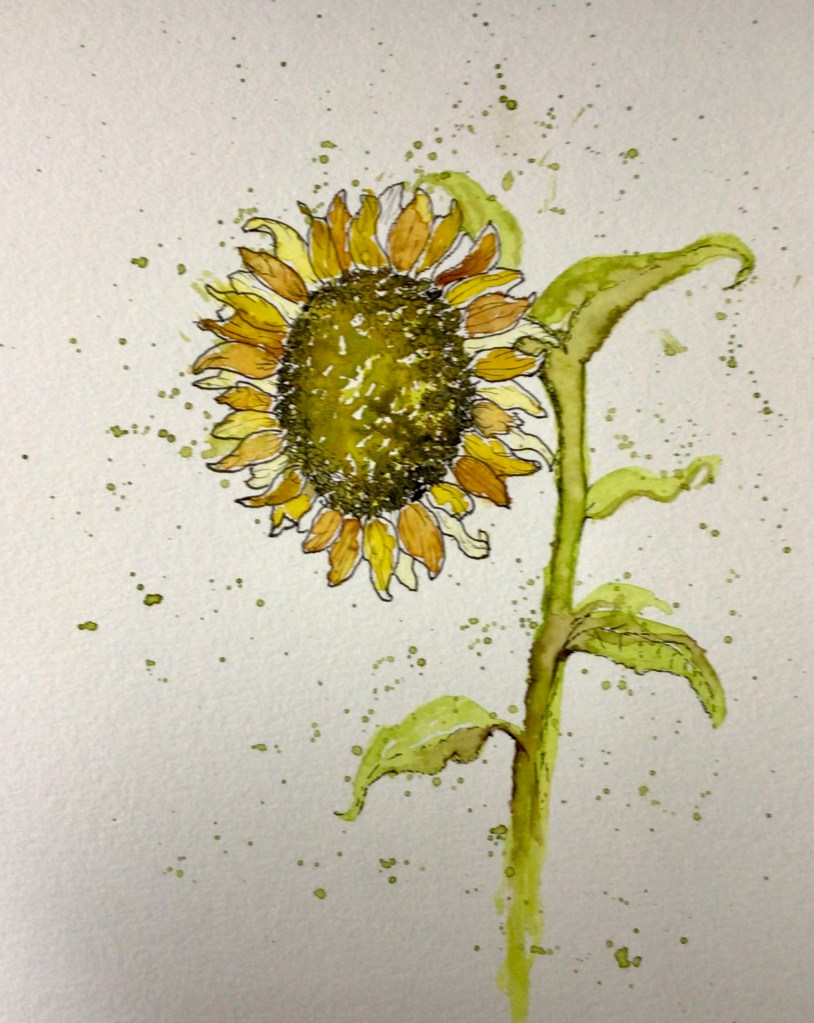
Note: the image at the top is one of my own loose sketches from years ago. The sunflower is a copy I painted following a wonderful book. The original sunflower appears as a lesson in Ink and Wash Florals, by Camilla Damsbo Brix, Page St. Publishing, 2022.

 elizabethlevett
Leave a comment