The difference between the right word and the almost right word is really a large matter. ‘Tis the difference between the lightning bug and the lightning. – Mark Twain
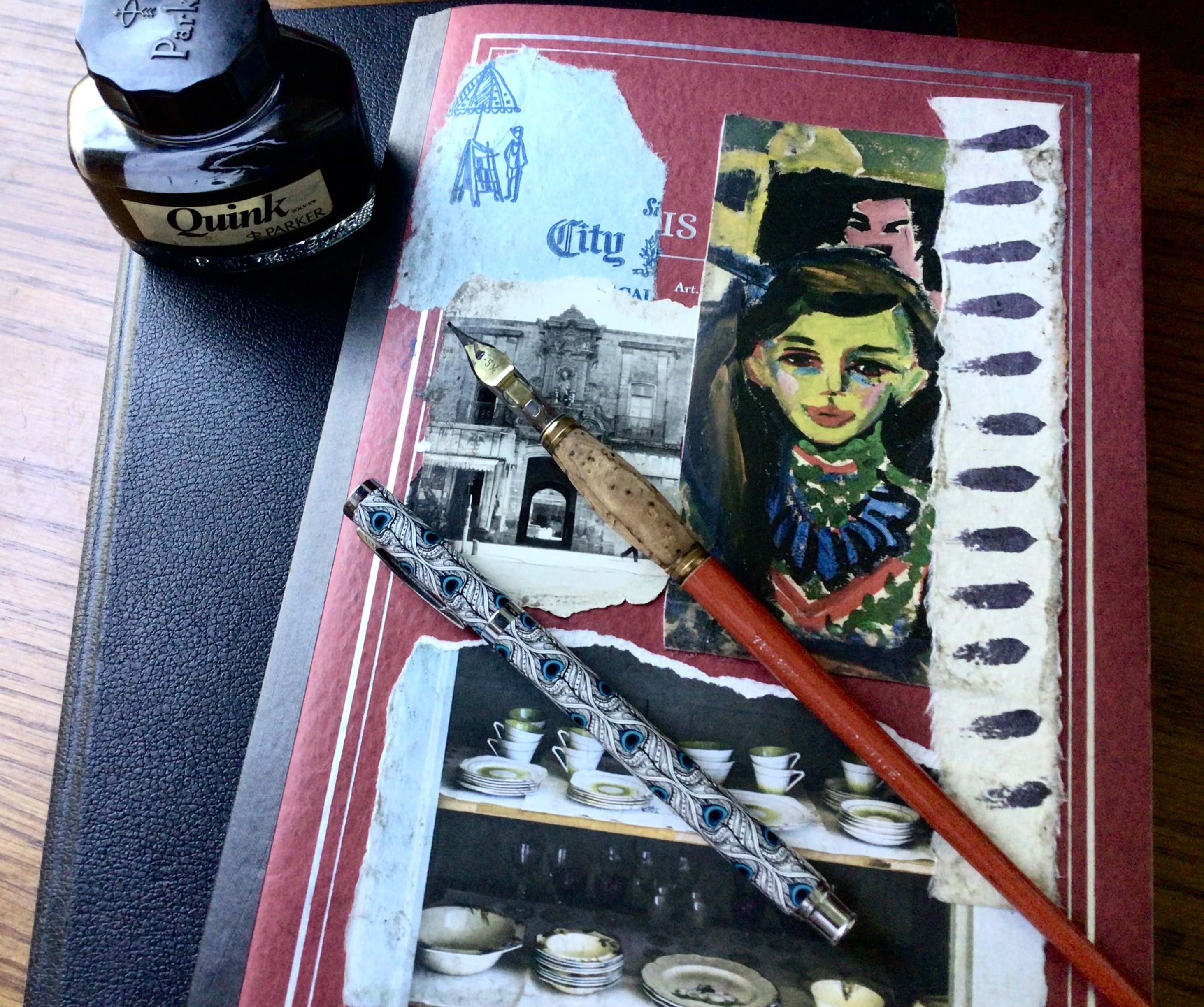
I’m in love with language. Words find me. When I learn a new one, like “crepuscular” or “pluviophile,” or “psithurism,” I can’t wait to write it down, share it, keep it close. Words know how much I want them, want to collect them, and keep them nice until I’m ready to use them — like fancy shoes or shiny marbles. I’ve been gobbling them up as long as I can remember. Sometimes I’ve felt that I’ve discovered the word, other times it’s as if the word has found me. Learning to read was like getting to sit at the grown-ups’ table. I couldn’t wait. Loading up at the library with a fresh summer stack was walking on rainbows. So many incredible words!
Teaching literacy has been like handing over the keys to the castle. “Welcome, friends, come in, come in!” When I teach young writers, I always spend time talking about word choice and how critical it is to a writer’s voice. It’s why Steinbeck is Steinbeck, Cisneros is Cisneros, and Murakami is Murakami. My students so earnestly want to be “real” writers and use the most fabulous words they can find so we collect them together and joyfully congratulate each other’s choices.
Storytelling is the transmission of culture, of history, of soul. Word choice is what gives a story color, texture, tone, flavor. It is the writer’s superpower; it is the transmission of the deepest parts of who we are and what we want to become. Finding the perfect way of saying something is completely individual. Sometimes the words we need appear unbidden and we welcome them with gratitude. Other times we must search and struggle, or even pull out a thesaurus knowing we’ll recognize it when we see it, like picking out a friendly face in a crowd – “There you are!” Finding a new word is finding a gem – something so perfect it shines. Knowing words like “stealth,” “knuckle,” or “strand,” and knowing how to use them, is just as important, just as powerful, as knowing “temerity,” or “bifurcate,” or “brayer.” The secret to finding good words and learning how best to place them in a piece of writing is simple. Writers need to read lots of books and listen to people speak. Art students are instructed to study the work of other artists, familiarizing themselves with the techniques and styles of the masters in order to inform their own talent. In the same way, writers need to expose themselves to a diverse range of good writing.
In recent years, the task of searching for the best word has become the business of the vast world of online companies who offer alternative options to make it faster and easier. When using any given word processing or grammar editing program, a somehow “better” choice is often suggested. And yet. For some reason my writing friends and I generally dismiss suggestions. The word being offered may seem more professional, more accessible, or more typical, but is it more me?? If the greatest compliment a writer can receive is that your readers recognize your unique style, your voice, then why would you trust your voice to an artificial tool?
Recently I was watching a drawing video on YouTube when an ad suddenly came on for a new program to assist writers. This ad was incredibly slick – careful attention and financing had gone into every detail and notably, there was no “skip ad” button. It went on for over two minutes. Instead of correcting a writer’s spelling, or punctuation, this app supplies words based on a programmed menu of writing styles — choose your tone and the app fills in the word. An attorney can choose a more forceful tone, a Yoga teacher can sound more polished, someone looking to join an ad agency can come off as ready to “join the team!” By extension, a writer can suddenly sound more like a “real” writer. I have to say I found the whole thing chilling – like a scene out of some Science Fiction movie when the hero discovers something is terribly wrong.
When I think of the most famous work of an artist, say Picasso, I think of the time and intention that went into the crafting of the piece. Guernica, Picasso’s most powerful painting and one that had an enormous social and political impact, took several weeks of careful, focused attention and work, drawing on the painter’s personal history and deep knowledge of their subject. Just as no other artist could have created the same painting, no other writer can say what you want to way in exactly the same way that you’d say it. No artificial intelligence is equipped to supply your voice — the unique and constantly evolving identity of a true craftsperson. I will stick with my thesaurus. I will indulge in eavesdropping on interesting conversations. I will read any good book I can get my hands on. I will continue to look under rocks on the beach of my history and my culture for those precious gems and quickly run home to add them to my collection. I will keep them shiny and safe and sometimes bring them out and hold them up to the light.
(A shortened version of this piece was aired on KQED September 5, and is available for listening at this link: https://www.kqed.org/perspectives/201601143837/elizabeth-levett-fortier-the-words-find-me)

 elizabethlevett
Leave a reply to William Gibson Cancel reply