There is a poetry in useful things. I thought of this just lately in the dentist’s office. The hygienist had just finished my cleaning and I was joking around with my dentist. We have a strong, almost sibling connection. Surrendering to a secret urge, I reached over and took up one of those scalers left on the metal tray and held it in my hand. I had a feeling he’d be okay with my impulse. With its spare lines, perfectly balanced weight and sculpted handle, this stainless-steel wonder represents decades of design improvements.
“This is so cool,” I said to him.
I love things like that. I realize it’s possible that I attach too much importance, too much love to objects like these. But I can’t resist an instrument so perfectly designed for a specific job, for a craft. I’m grateful for any excuse to go looking for special tools – especially those that look like they were made in a different time. I tell myself this isn’t some misplaced nostalgia on my part. It’s more a desire to know something, to understand where we came from by getting a sense of how things are done, how things used to be done. To hold and use a well-crafted tool that’s been passed down helps us see our ancestors at work, doing the ordinary, necessary things they did with their hands.
I think of the tools my parents used day after day all those years ago. I still have the funny old tin measuring cup my mom used when she baked. I remember how she kept her sewing box and the old Singer sewing machine always ready. There were the among my father’s tools the wrenches and pliers, his level, compass, T-square, and slide rule. And the scissors! My mother had garden clippers, pinking shears, wire cutters. I believe I fall in love with people as I watch them use cherished instruments to create garments, quilts, cakes, sketches, and paintings. I even find myself moved by the sublime humility of a rusted spade left lying in the garden.
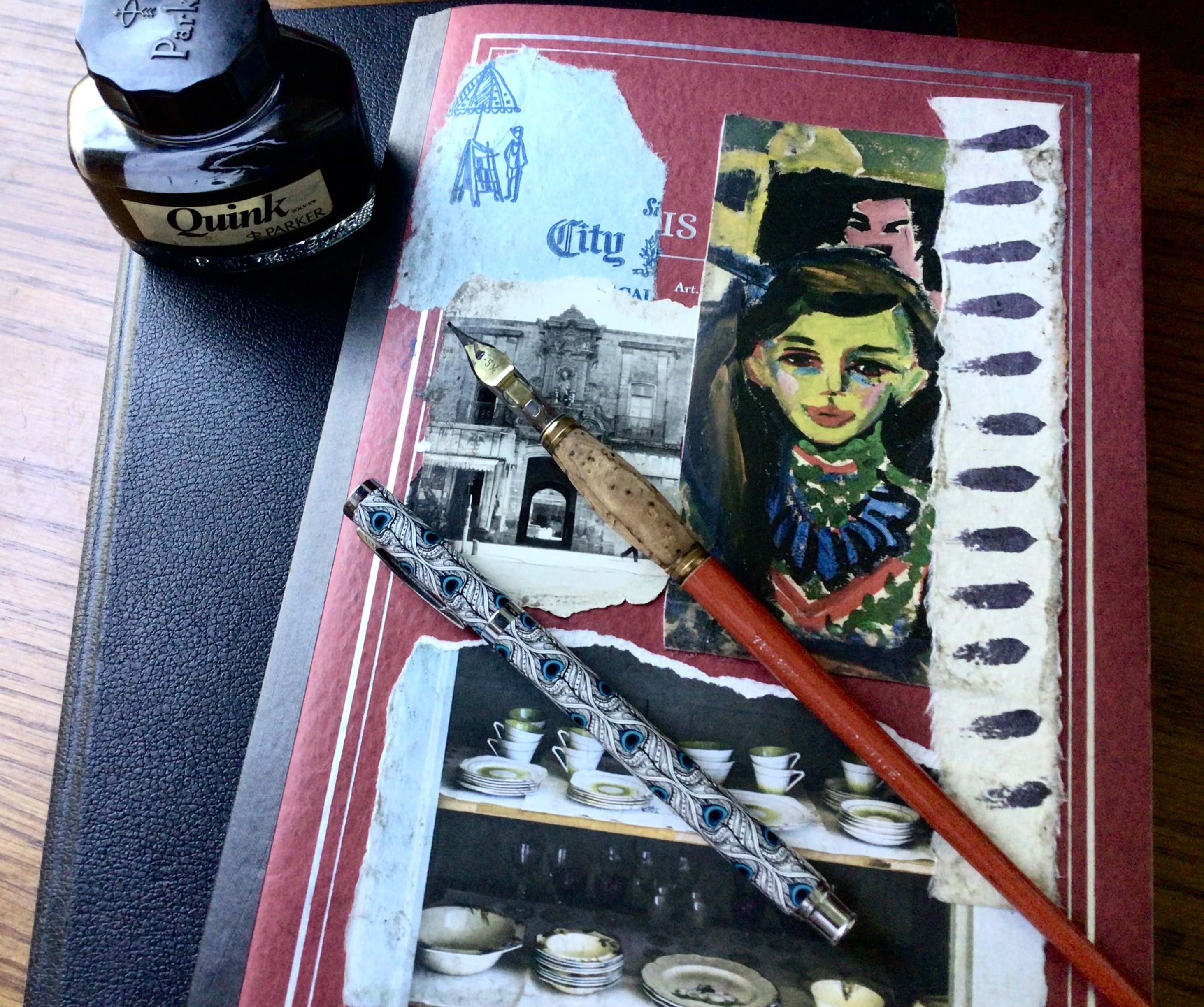
This may be why I so love block printing. A very old art form, it’s something I’ve always wanted to learn and I’m finding it endlessly satisfying. I don’t think I’ll ever become brilliant at producing detailed, elegant pieces but it meant acquiring a collection of new tools. First, there are the gorgeous palm tools with varying grades of metal tips for cutting lines and gouges into the block. These are designed with wooden handles that fit comfortably into the palm of the hand. Then, after the design has been cut and inked, you must use a flat, smooth weight called a baren to smooth the inked image across the paper. Naturally I selected a beautiful, bamboo-wrapped baren from the Japanese hardware store. And naturally I had to find a wonderful old wooden box to keep these things organized. (An antique brick mold makes a gorgeous storage box!) Even the act of pulling the whole business out and getting it all set up on the table is a moment of private ecstasy. Very little has changed in the design of these tools and learning the practice has given me a greater appreciation for the time and care that went into earlier examples of printmaking.
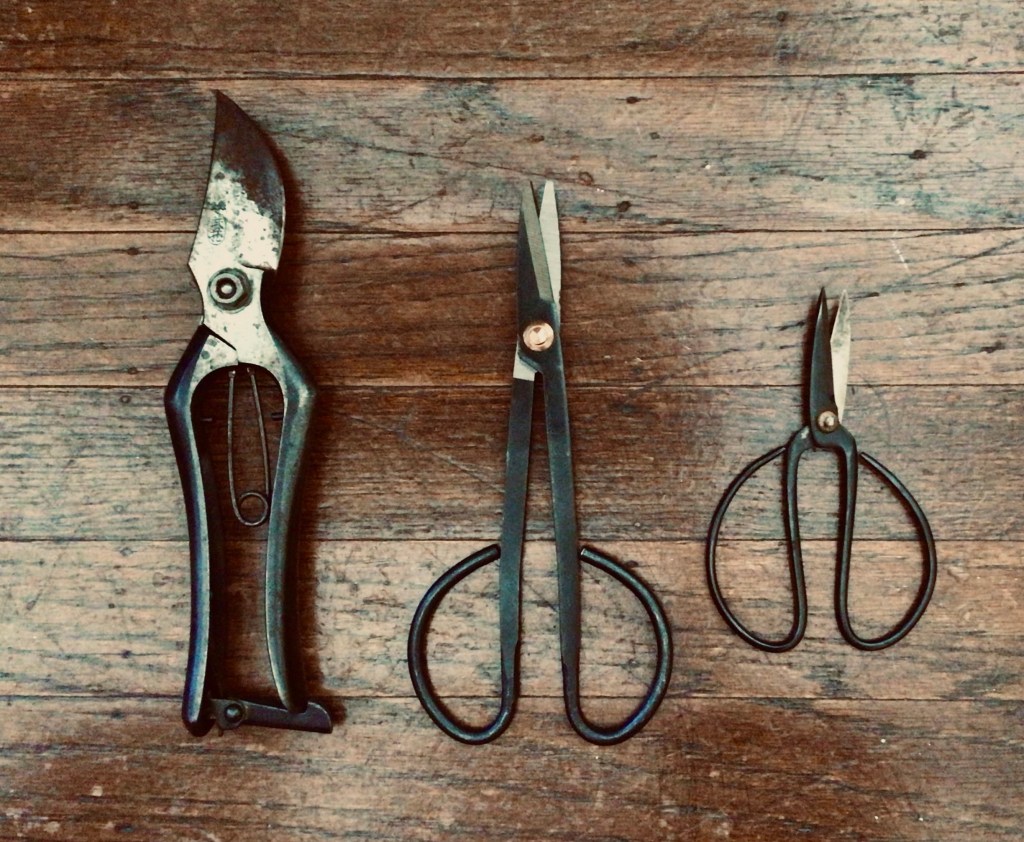
We partner with our tools and enter a dance together of culture, tradition, and care. Think of the history embodied in the lathe, the adze, the alembic, the spinning wheel, the axe, even the watering can and the wheelbarrow. I cherish the familiar, the carefully designed, the comfortable instruments, the tools patinaed from use. I keep a collection of interesting scissors, and jealously guard the sewing shears from the possibility their possible use to cut paper. There is a solemnity even to trimming flowers – since this job means I get to use the blackened flower clippers I kept aside from a dear friend’s belongings when we cleaned out her apartment after she died. (She had found them at the Japanese hardware store.) I keep them clean and sharp in her memory. There is a poetry to these objects that have been handed down for our use and a humble devotion in maintaining them. They constitute a tableau of usefulness. A resplendent array that speaks of dependability, history, and care. There is a sanctity to the instruments we use and then pass on. The things we cherish, the work we’ve done. It is the poetry of what came before, the poetry of who we are.


 elizabethlevett
Leave a reply to cutegammy Cancel reply